city + municipal events in Santa Ana.
A city or municipal event is a public gathering organized by a city department, civic committee, district partner, or community group, usually built around entertainment, family activities, booths, food, and a managed outdoor footprint. This is a local guide to City + Municipal Events in Santa Ana, CA — what they usually include, where they tend to fit, how public-site planning works, and what committees should expect before event day.
Santa Ana is Orange County's county seat and has a dense civic landscape: neighborhood parks, school-adjacent fields, downtown public spaces, and long-running community event traditions. Municipal events here are usually planned around family access, pedestrian flow, parking, shade, and clear separation between activity zones and food lines.
The Carnival Fun Experts helps plan carnival-style layouts for civic events across Orange County, with booths, inflatables, concessions, games, entertainers, and themed public-event areas.
The shape of a municipal carnival in Santa Ana.
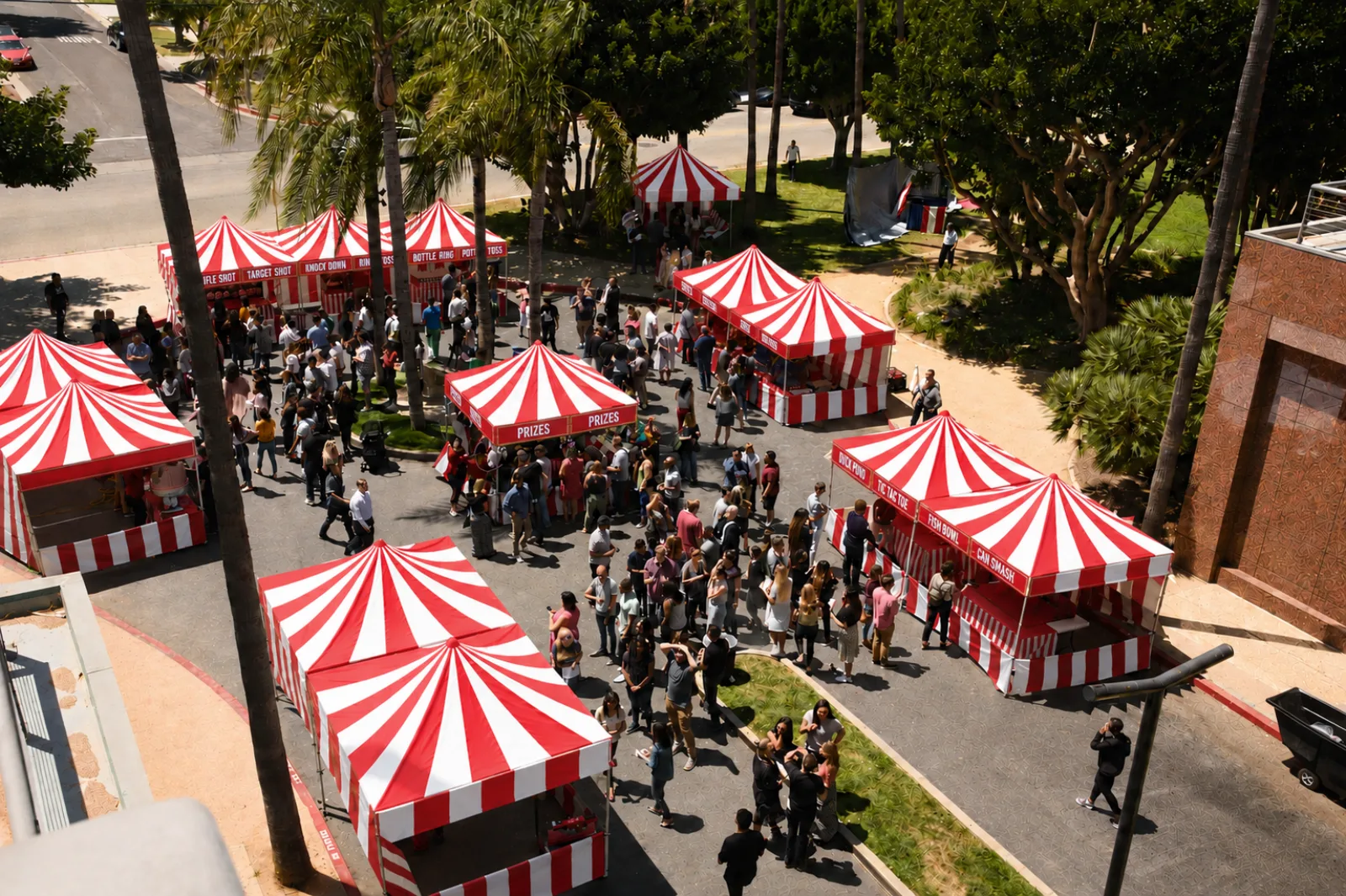
A typical Santa Ana municipal event uses a wider footprint than a private party or school carnival. Game booths may sit in a straight row along a park path, inflatables need a larger buffer zone, and concessions work best near seating or a shaded area. The event may also include resource tables, city information booths, sponsor tents, a performance stage, or a community partner area.
At parks such as Centennial Regional Park, Santiago Park, El Salvador Park, and Memorial Park, the site plan usually matters as much as the attraction list. Families arrive at different times, lines form unevenly, and staff need clear service lanes. A good layout keeps the most active attractions away from narrow paths, puts young-child activities where parents can watch, and leaves enough open space for people to move without cutting through queues.

What's typically included.
-
Game booths.
Classic carnival games such as ring toss, balloon pop, bottle knockdown, fish bowl, and sports-skill games. Public events usually need enough booths to spread out lines.
-
Inflatables.
Bounce houses, combo units, slides, obstacle courses, or interactive inflatables, selected for the age range, available grass or pavement, and required buffer area.
-
Concessions.
Popcorn, cotton candy, snow cones, churros, pretzels, and similar festival foods. Food handling and sales rules depend on the event structure and permit path.
-
Activity zones.
Young-child games, teen attractions, prize redemption, photo spots, and quiet corners can be separated so the event does not feel like one crowded line.
-
Entertainers.
Balloon artists, face painters, strolling performers, stage acts, and seasonal characters are common add-ons for civic family events.
-
Décor + wayfinding.
Balloon arches, pennants, branded entry points, booth signs, and simple directional markers help a public crowd understand where to start and where lines belong.
Typical timeline for city + municipal events in Santa Ana.
- 1
Months ahead
Date, site, estimated attendance, department approvals, and rough attraction mix are set. Park or facility reservations begin early because public sites have competing community use.
- 2
Weeks ahead
Site map, insurance paperwork, power plan, food rules, load-in access, and staffing assumptions are reviewed. This is also when sponsor booths and city tables should be placed on the map.
- 3
Event day
Setup starts before public arrival. Equipment, booth rows, inflatables, concessions, and signs are placed according to the approved footprint and adjusted for actual site conditions.
- 4
Strike
Public-event pack-out depends on the footprint, access roads, and whether the site has another reservation after close. Committees should leave time for trash, lost items, and final walkthroughs.
Specifics for Santa Ana.
- Common venues: Centennial Regional Park, Santiago Park, El Salvador Park, Memorial Park, Santa Ana Stadium, school fields, and civic gathering areas can all support different sizes of public event footprints.
- School districts: Santa Ana Unified School District and Garden Grove Unified School District are relevant when a municipal event uses school-adjacent facilities, student volunteers, or district-connected outreach.
- Permits: Public park and civic-site events generally require coordination with the City of Santa Ana, including site reservation, insurance review, and any rules tied to food, amplified sound, generators, or street impacts.
- Power: Municipal events should plan power by zone. Inflatables, concession machines, lighting, sound, and sponsor booths have different load needs and should not all depend on the same outlet.
- Layout: Dense Santa Ana sites benefit from clear booth rows, visible entry points, separate food lines, and attraction spacing that keeps families from standing in active walkways.
- Weather: Southern California's typically dry climate works well for outdoor civic events, but shade, hydration, wind, and a written rain plan still belong in the planning notes.

Santa Ana, CA.
ZIPs: 92701 · 92702 · 92703 · 92704 · 92705 · 92706 · 92707 · 92711 · 92712 · 92735 · 92799
The Carnival Fun Experts delivers city + municipal events throughout Santa Ana and the surrounding Orange County area. Pin shows the city center; we cover every ZIP listed above.
Common questions.
What are city and municipal events?
City and municipal events are public gatherings organized by a city department, civic committee, public agency, or community partner. A carnival-style version usually includes game booths, inflatables, concessions, entertainers, resource tables, and a managed outdoor layout.
What is usually included in City + Municipal Events in Santa Ana?
Most include a mix of family games, inflatables, food or snack stations, entertainment, sponsor or resource booths, and a site plan built for public foot traffic. The exact mix depends on the park, attendance estimate, age range, and permit requirements.
Which Santa Ana venues work for municipal carnival events?
Centennial Regional Park, Santiago Park, El Salvador Park, Memorial Park, and Santa Ana Stadium are recognizable civic or community sites that can support different event formats. The right fit depends on parking, field space, access for setup, and whether the event needs a stage, food area, or large inflatable zone.
Do municipal events in Santa Ana need permits?
Public events on city property generally require coordination with the City of Santa Ana. The review may cover facility reservation, insurance, generators, amplified sound, food service, temporary structures, and access. Events connected to a school site may also involve district facility-use rules.
How early should a committee start planning?
For a public event, months ahead is normal. Site reservations, internal approvals, insurance review, and food or sound rules can take longer than selecting the actual carnival attractions. Smaller neighborhood events may move faster, but public sites still need a clear paper trail.
How should the event footprint be arranged?
Start with public flow: entrance, information table, game row, inflatable area, food line, seating or shade, and exit path. Keep high-activity attractions away from narrow walkways, leave emergency and service access open, and avoid placing food lines where they block game booths.
About this guide.
Compiled by The Carnival Fun Experts for local committees comparing carnival-style options for public events in Orange County. The Carnival Fun Experts is the Orange County and Inland Empire operation of My Little Carnival, with information here focused on planning context rather than a promise about any specific event scope.
Helpful local references: City of Santa Ana Parks, Recreation and Community Services · Santa Ana Unified School District
City + Municipal Events in nearby cities.
Planning a city or municipal event in Santa Ana?
Share the basics — site, date, public hours, rough attendance, and attraction goals — and The Carnival Fun Experts will send back a scoped quote with a practical event layout.
Get a quote →